AI consulting
How to start an AI consulting business
with your industry experience.
Companies have access to AI tools. What most of them lack is someone who understands their work well enough to put those tools to use. If you have 10+ years in an industry, that person can be you, without writing a line of code.
Free · No card needed · Results in a few minutes
Why you
Why industry experience beats tech skills in AI consulting.
Most businesses don't need someone to build a new AI model. They need someone who can look at how their team works, see where the hours go, and show how AI tools can take over the repetitive parts safely.
That takes knowing the work. A sales leader knows where proposals get stuck. A finance manager knows which reports eat a week every month. An HR professional knows how much time goes into screening and onboarding. Pair that knowledge with practical AI skills and you have something most tech-only consultants can't offer.
Be honest about where your limits are. You don't have to be an engineer: for complex builds, partner with a technical freelancer while you own the client, the process and the results.
What you'd offer
What AI consultants actually do for clients.
Six services you can offer as an AI consultant, from a one-off audit to an ongoing retainer.
AI opportunity audit
Review a team's workflows and deliver a clear list of where AI saves time, ranked by impact and effort.
AI automation
Set up workflows that connect AI to the tools a team already uses, so routine tasks run on their own.
Team training
Hands-on workshops that teach a team to use AI tools well in their real day-to-day work.
AI guidelines and policy
Help a company decide what staff can and can't do with AI, especially with customer and company data.
Tool selection
Compare AI tools and vendors for a specific need, so the client doesn't pay for software nobody uses.
Ongoing advisory
A monthly retainer to keep improving workflows, train new staff and keep up with new tools.
Examples
AI consulting ideas by professional background.
Your best niche is usually the industry or function you already know. A few examples:
Sales and account management
AI for prospect research, call preparation, proposals and follow-up emails for small sales teams.
Finance and accounting
AI-assisted reporting, invoice processing and month-end summaries for small and mid-sized companies.
HR and recruiting
AI for job descriptions, onboarding material and internal FAQs, with clear rules on fairness and candidate privacy.
Operations and project management
Automating status reports, meeting notes, documentation and the hand-offs between teams.
Education and training
Teaching schools, training providers or corporate teams how to use AI to prepare material and save hours each week.
Healthcare administration
Reducing paperwork in clinics and practices, always within the privacy rules that apply to patient data.
Skills
What you need to know, and what you don't.
You need
- Deep knowledge of one industry or function
- Confident, daily use of mainstream AI assistants
- The basics of no-code automation tools
- A working understanding of data privacy
- The ability to explain things in plain language
You don't need
- To know how to code
- A degree in computer science or machine learning
- To build your own AI models
- To know every new tool the week it launches
Pricing
How AI consultants package and price their work.
Price the time and money you save the client, not the hours you spend. Four common models:
Fixed-fee audit
A defined review and report. The easiest first sale.
Workshop or day rate
Training sessions for a team, priced per session or per day.
Implementation project
Set up specific automations for a fixed price and timeline.
Monthly retainer
Ongoing support and improvements. Your steadiest income.
Step by step
How to land your first AI consulting client.
Choose your niche
The industry or function you know best. The free career assessment helps you see where your experience is strongest.
Use AI in your own work
Spend 30 days using AI tools on real tasks. Your own before-and-after becomes your first case study.
Package one offer
One clear service for one audience, like "an AI audit for small accounting firms".
Run a pilot
Work with one company from your network at a founding price, in exchange for results you can share.
Share the results
Turn the hours saved into a short case study and post it on LinkedIn. That brings the next clients.
Start with step 1 today
Find the skills and audience your consulting can be built on. Free, in a few minutes.
Earn trust
Responsible AI is part of the service.
Clients worry about getting AI wrong: confidential data pasted into the wrong tool, confident answers that turn out to be false, decisions nobody can explain. Make those worries part of your offer.
- Agree which data may and may not go into AI tools before you start
- Build a human check into every workflow where accuracy matters
- Follow the privacy rules of your client's industry and country
- Document what you set up, so the client isn't dependent on you to understand it
Consultants who take this seriously stand out quickly, especially with older, more cautious businesses that newer AI agencies struggle to win.
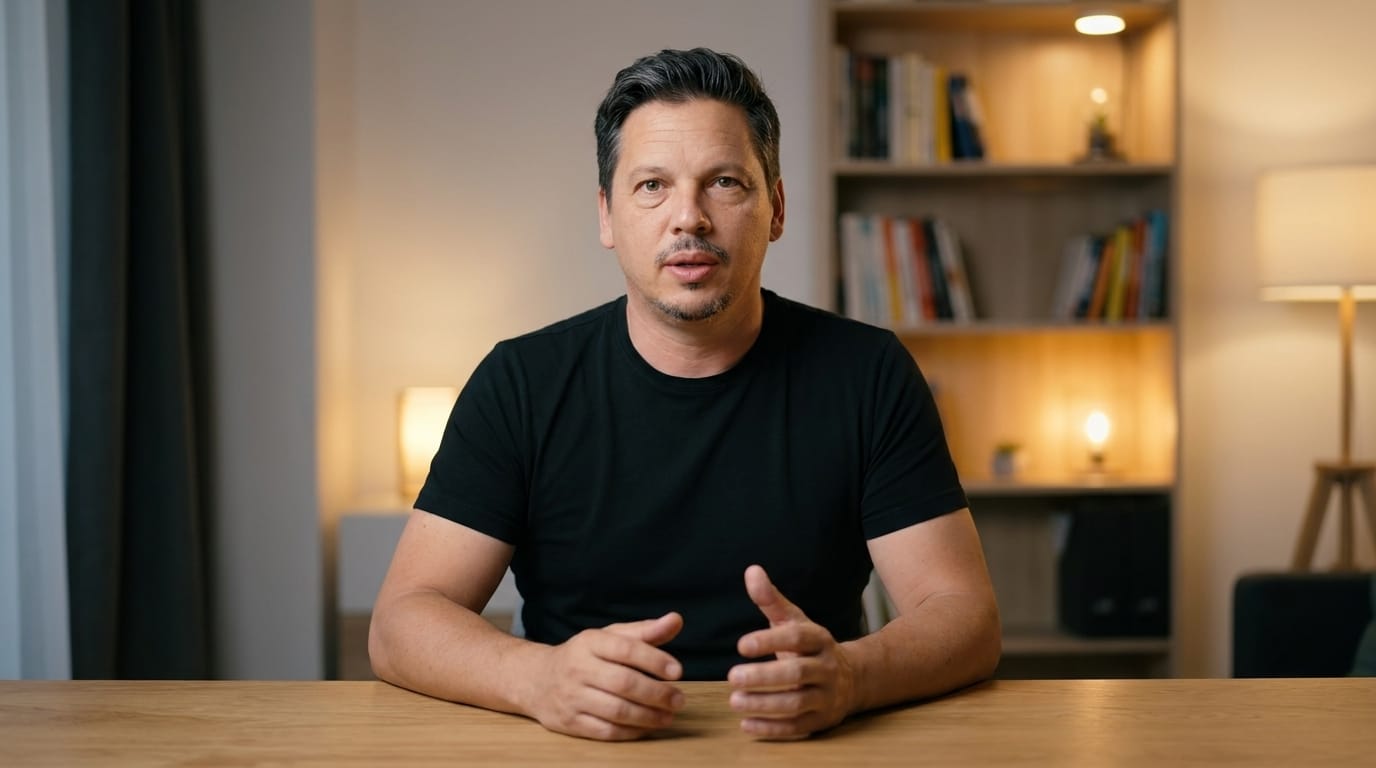
Silvio Paiva · Founder, The 40s Reset
Who wrote this
Written by someone who runs his business with AI.
I spent over two decades in enterprise B2B tech sales and consulting. Today I run a one-person business where AI does much of the work a team used to do.
I built The 40s Reset App to help experienced professionals do the same: turn what they know into an offer, with AI at every step.
Free career assessment
Your industry knowledge is the hard part. You already have it.
Find out which of your skills people would pay for, who needs them, and what your first consulting offer could be.
Free · No card needed · Results in a few minutes
Questions
AI consulting: common questions.
Do I need technical skills to become an AI consultant?
Not deep ones. You need confident everyday use of AI assistants and the basics of no-code automation tools. Your industry knowledge is the main value. For complex technical builds, partner with a developer.
What is the difference between AI consulting and AI automation?
AI consulting is advice and strategy: where AI fits, which tools to use, how to use them safely. AI automation is the hands-on setup of workflows that run tasks automatically. Many consultants offer both.
How much do AI consultants charge?
It varies widely by niche, country and experience. The strongest approach is pricing the result, such as hours saved each month, through fixed-fee audits, projects and monthly retainers rather than hourly rates.
Can I start AI consulting as a side hustle?
Yes. An AI audit or a training workshop fits well alongside a job. Check your employment contract first, and don't work for your employer's clients or competitors. See our guide to freelance side hustles.
Which AI tools should I learn first?
Start with one or two mainstream AI assistants and one no-code automation tool, and use them daily on your own work. Depth in a few tools beats a shallow tour of dozens.
Is AI consulting a good career change at 40 or 50?
It can be one of the best, because clients value judgment and industry knowledge, which come with experience. Read more about a career change at 40 or a career change at 50.